Showing posts with label Google. Show all posts

Does Microsoft's Bing have Google running scared?

Microsoft may have developed a contender that threatens Google's Web search dominance.
##CONTINUE##
In a story headlined "Fear grips Google," the New York Post reports that the launch of Microsoft's Bing search engine has so upset Google co-founder Sergey Brin that he has top engineers working on "urgent upgrades" to Google's service. Brin is said to be leading a team to determine how Microsoft's search algorithm differs from the closely guarded one Google employs. The tabloid also notes that it's rare for Google's co-founders to have such a hands-on involvement in the company's daily operations.

"New search engines have come and gone in the past 10 years, but Bing seems to be of particular interest to Sergey," an anonymous source described as an "insider" to the newspaper.

A Google spokesperson declined to comment on the level of Brin's involvement but did tell the newspaper that the company always has a team working on improving search.

Microsoft, which launched as Bing as its default search engine earlier this month, is reportedly spending $80 million to $100 million in an ad blitz to tout its latest search effort. Rival Google, meanwhile, spent just $25 million total on advertising last year, according to an AdAge report.

Bing's launch bumped Microsoft's search share up to 11.1 percent last week from 9.1 percent the prior week, according to numbers released by market analyst ComScore.

However, that initial increase didn't impress Google CEO Eric Schmidt, who was pretty tight-lipped earlier this week when queried about Bing's arrival.

"It's not the first entry for Microsoft," Schmidt said Tuesday in an interview with Fox Business Network. "They do this about once a year."

Google Chief Financial Officer Patrick Pichette said Tuesday that the company planned to hold "a review tomorrow on it with the executive committee."

While Microsoft has a long way to go before it makes a dent in Google's business, Bing may end up being the only true alternative to Google if Yahoo decides not to compete in the search market over the next few years.

-----------------------------
BY Steven Musil
Source:cnet

Steven Musil is the night news editor at CNET News. Before joining CNET News in 2000, Steven spent 10 years at various Bay Area newspapers.

©2009 CBS Interactive Inc. All rights reserved.

Google China Launches Internet Shopping Search Service

Google China has announced that the company has launched the beta edition of its Internet shopping search service, covering China's B2C and C2C e-commerce sectors.
##CONTINUE##
At present, Google China has provided the link of this new product on the front page of its website.

According to Yang Wenluo, vice director for Google China Engineering Research Institute, Google's goal is to integrate global information to benefit everyone. With this goal, Google's new Internet shopping search product will integrate online shopping information, enabling Chinese consumers to compare products' prices.

With is new service, users can search for products by inputting relevant information and the search results will be divided into different categories in accordance to the models of products. Clicking these search results, users can see the prices, comments and parameters of these products. In addition, the front page of this shopping search service will list the most searched products in the recent period.

So far, products covered by the search service are mainly mobile phones and electronics products.

-----------------------------
BY China Tech News Staff
Source:China Tech News

Copyright 1999-2009 ChinaTechNews.com. All Rights Reserved.

谷歌成立研发团队评估必应搜索算法 创始人督战

知情人士透露,谷歌对微软新版搜索引擎必应(Bing)十分紧张,导致谷歌联合创始人赛吉·布林(Sergey Brin)亲自上阵督战。
##CONTINUE##
知情人士称,必应让谷歌感到不安,布林已亲自上阵,成立一支由谷歌顶级工程师组成的研发团队,评估必应搜索算法究竟与谷歌搜索算法的不同,对谷歌搜索进行“紧急升级”。

该消息称,布林如此深入地参与公司日常运作,这是不同寻常的。对此,谷歌发言人拒绝发表评论,但表示:“我们一直有一只团队负责完善搜索,我们在搜索领域投入的时间和精力最多,搜索算法也经常升级。”

两周前,微软推出了新版搜索引擎必应。有消息称,微软将斥资8000万美元至1亿美元推广必应。凭借漂亮的首页和方便的导航,必应推出后不久便赢得分析师的好评。

早期数据显示,必应将微软搜索市场份额提升2个百分点,达到11%,但增长的这部分份额并不是来自谷歌和雅虎。

标准普尔分析师斯科特·凯斯勒(Scott Kessler)认为,必应还有很长一段路要走,目前还无法取代谷歌的垄断地位。

微软发言人表示, 必应目前主要强化四个方面的搜索结果:购物、旅游、健康和本地搜索。

-----------------------------
文章出处:新浪科技
作者:李明

Google Native Client grows out of research phase

Satisfied that its security underpinnings are solid, Google has promoted its open-source Native Client technology to accelerate web applications out of its research phase and is taking steps to build it into the Chrome web browser.
##CONTINUE##
"Based on our experience to date, we believe that the basic architecture of our system is sound and the implementation is supportable. So now we are undertaking a number of tasks to transition Native Client from a research technology to a development platform," said Brad Chen, Google's Native Client engineering manager, in a mailing list announcement on Wednesday.

Native Client, called NaCl for short, is a mechanism to run software downloaded over the web directly on x86 processors such as Intel's Core line. The key motivation is to attain the speed of regular "native" software installed on a computer rather than the much slower JavaScript environment that sophisticated websites use today. It's one part of Google's broad effort to evolve the web from a collection of relatively static sites into foundation for more powerful applications.

Executing native code from the web is easy -- until you start trying to worry about security risks. To this end, Native Client examines software before it runs to block software that takes a variety of prohibited actions, an idea called static analysis, and it runs the software in a protected sandbox.

"We recognised the underlying technology to be ambitious and risky, and felt strongly that a generous measure of public scrutiny was appropriate before we committed to any definite plans," Chen said. Satisfied that Native Client passed muster, Google will remove various security constraints such as the inability to execute Native Client software downloaded from the open internet, he said.

Native Client was first introduced in December as a browser plug-in, but Google doesn't like that approach.

"We recognise that there is well-justified resistance to installing browser plug-ins. For this reason we have a strong preference for delivering Native Client pre-installed or built into the browser, and we'll be focusing on that as our main strategy for delivering Native Client to users," Chen said.

And now we see one reason why Google is interested in having a browser of its own available: "Careful readers may have already noticed evidence of integration into Chromium in the Native Client source," Chen said, referring to the open-source project that underlies the Chrome browser.

Google touted Native Client at its Google I/O conference in May, showing off a web-based photo editor as an example of the processing power the technology offers. Google is also trying to pair Native Client with another company project, O3D, which lets browsers take advantage of hardware to accelerate 3D graphics.

-----------------------------
BY Stephen Shankland, CNET News.com
Source:builder.au

Copyright © 2009 CBS Interactive, a CBS Company. All rights reserved.

Google's Schmidt dings Bing

Google CEO Eric Schmidt, as one might expect, offered no public sense that Microsoft's new Bing search engine has him pacing the halls at night.
##CONTINUE##
"It's not the first entry for Microsoft. They do this about once a year," Schmidt said Tuesday in an interview with Fox Business Network. "I don't think Bing's arrival has changed what we're doing. We are about search, we're about making things enormously successful, by virtue of innovation."

Bing has been well-received in its first trip around the Internet, but it obviously has an awfully long way to go before it makes a dent in Google's business. Still, with some in the search industry now wondering if Yahoo really intends to compete in search over the next few years, Bing may shape up as the only true alternative to Google.

Schmidt seemed to acknowledge those thoughts. "Google is about getting all the information and organizing it. Yahoo has a different strategy. We think ultimately Bing will evolve to a different strategy as well."

Earlier in the day, Google Chief Financial Officer Patrick Pachette said the company planned to hold "a review tomorrow on it with the executive committee," so it's not like Google is ignoring the possible threat, either.

Schmidt held forth on a wide range of topics during the interview, including:

• Yahoo: "As you know we got within an hour of doing a very deep partnership with Yahoo, but we were unable to do it because of the government and their concerns over various parts of the deal."

• Smartphones: "This is the year of mobile phones. What we like is every one of these has a powerful browser and every one is used to search."

• And Google's new plug-in for Outlook: "I grew up with Outlook as well, which is why we're doing these things. It's very important to bridge the new kind of customer, the young customer, with the existing customer that has grown up with the Microsoft infrastructure."

-----------------------------
BY Tom Krazit
Source:cnet

Tom Krazit writes about the ever-expanding world of Internet search, including Google, Yahoo, online advertising, and portals, as well as the evolution of mobile computing. He has written about traditional PC companies, chip manufacturers, and mobile computers, spending the last three years covering Apple.

©2009 CBS Interactive Inc. All rights reserved.

谷歌搅局 微软Windows 7或遭振荡

微软09年的日子的确有些“水深火热”,近日,欧盟反垄断监管机构欧盟委员会又开始向微软举起反垄断大棒,已向各大PC厂商发出了问卷,要求其回答微软是否曾向它们施压,以此求证微软垄断证据。凭以往微软应对欧盟的经验,这很有可能是一场马拉松式的拉锯战,暂时还构不成威胁。也许现在令微软坐卧不安的却是众多上网本厂商弃微软Windows,转战谷歌Android。
##CONTINUE##
早在去年末,华硕就已着手开发运行Android的上网本产品。而在上周于台北举行Computex大展上,宏基、明基两大台系厂商相继宣布将推出采用谷歌Android操作系统的上网本,台湾笔记本代工厂商广达、仁宝更是在展会期间和谷歌进行了接触,对Android上网本的技术细节展开交流。与此同时,惠普、戴尔、华硕等PC巨头正在酝酿推出Android上网本的消息也纷纷传出。

Android操作系统本是谷歌针对智能手机推出的一款操作系统,如今却成为PC厂商打破微软在上网本垄断的不二选择。其原因一是PC厂商面对上网本的白热化竞争,差异化成为厂商的竞争核心力,打破微软XP一统天下已成必然。此外另一个原因在于谷歌的Android操作系统在于不收取任何费用并且支持开放式源代码,进一步降低上网本的成本,为厂商提供利润空间,同时更方便厂商对上网本进行软件的个性化开发以制造差异化优势。

上网本已成为08、09年PC产业的一块极有诱惑力的肥肉,由于微软在上网本市场的缺位,导致了微软IE浏览器和Windows操作系统市场份额的下滑。而最具威胁的则是如果谷歌的Android成功占领上网本市场,对微软十月份即将推出的Windows7可谓是不小的打击,被微软寄于厚望的Windows7如果在市场大打折扣,则对微软的影响是不可小觑的。

据称Windows 7的市场零售价格将在下周公布。据美国电子零售巨头百思买透露的即将上市的Windows 7操作系统升级价格及其他早期计划分析,Windows 7的家庭高级版、商业升级版的价格则分别便宜了逾60%和50%。 如果按照该定价政策推算,Windows 7家庭高级版的价格将在99.99美元(同一版本为269.99美元),而专业版的价格应为149美元(Vista为299美元)。

一向自大的微软也开始大打价格牌,不得不说市场是公平的上帝之手。

-----------------------------
文章出处:IT商业新闻网
作者:小月

盖茨接班人称谷歌Wave反互联网 应依赖开源软件

微软首席软件架构师雷·奥兹(Ray Ozzie)认为谷歌波浪(Wave)是“反互联网”的。
##CONTINUE##
奥兹上周末表示,“波浪”违反了一条他奉为圭臬的原则:复杂是互联网的大敌。奥兹称,开放的web需要开放的数据格式和协议,而不是相反。奥兹没有确切解释“波浪”的复杂程度,但表示,“波浪”应当依赖开放源代码软件,否则其他公司将因过于复杂而无法部署。

奥兹对“波浪”和微软Mesh进行了比较。Mesh是一款数据存储框架,可以存储通信录、电子邮件、文档或照片等数据,将包含在今年晚些时候发布的Azure云计算平台中。奥兹称,“‘波浪’和Mesh基本上完全相同,但Mesh源自Groove,其特点是非常简单,第三方可以轻松地部署。”

尽管奥兹大谈Mesh的开放性,但实际情况是,要部署Mesh,客户必须部署微软的SQL Server;“波浪”则大量使用了开放技术,例如可扩展消息处理现场协议(XMPP)和Javascript。

当然,“波浪”也存在问题。其一是只使用App Engine;其二是必须使用“既简单又复杂”的Javascript语言。

-----------------------------
文章出处:新浪科技
作者:志翔

Google Wave - Five Things You Should Know

Over a week ago, on the second day of their I/O conference, Google unveiled Wave - a groundbreaking communication and collaboration tool that melds together email, instant messaging with social networking. You can watch the video here but be forewarned - it's over an hour long.
##CONTINUE##
Here's what you need to know about Google Wave -

1. Google Wave offers a new, unified communication model. Google Wave allows both asynchronous and synchronous modes of communication, allowing for instant messaging type communication within the context of an email.

2. Google Wave incorporates the "social" component. Wave allows you to not only interact with your own messages but also the messages of anyone in your "wave". It's about collaborative communication.

3. Google Wave makes sharing rich content simple. Instead of having to attach photos, video clips and other rich content to an email, Wave allows users to drag and drop this content from the desktop. The simplicity in sharing this content is revolutionary for the corporate user.

4. Google Wave is a platform with a developer API. Wave extensions are 3rd party applications that add value to the platform. Just like in Facebook, developers can build new gadgets that leverage the Wave communication and collaboration platform.

5. Google Wave signals the power of Rich Internet Applications (RIAs). This is no longer your father's Web user experience (UX). The kind of interactivity and user experience that a RIA provides is markedly different from that of an earlier generation of web applications. Google Wave illustrates the new standard for web based UX - all SaaS and cloud based applications must follow suit or be left behind.

Well, there you have it - the five implications of Google Wave... oh, yeah, one more thing. Bing - it's the sound of Microsoft getting trumped again. While they are launching another search engine, Google is remaking communication and collaboration over the Web.

-----------------------------
BY Andre Yee
Source:ebizQ

Copyright © ebizQ. All rights reserved.

Google Squared Launched

Wolfram Alpha may divide critics more savagely than a jar of Marmite but it certainly re-enforces a new paradigm in search - and something Google is keen to home in on...
##CONTINUE##
Consequently, the (by far and away) leading industry search giant has today announced public availability of 'Google Squared' - a concept project it first unveiled last month and which tallies user queries into neat, comparable tables.

"Google Squared is an experimental tool that takes a category (like US presidents, roller coasters, or digital cameras) and attempts to create a starter "square" of information, automatically fetching and organizing facts from across the web," said the company in a launch statement. "You can modify your square by removing rows and columns you don't like--or by adding new rows and columns and having Google Squared attempt to fetch the relevant facts. Verify and correct the facts in your square by exploring the original sources and investigating other possible values. If you're happy with your square you can save it and come back to it later. Google Squared does the grunt work for you, making research fast and easy."

Certainly the ingenuity behind Google Squared cannot be denied. Consumers clearly would like to compare data, not just be presented with web pages linking to hundreds of pages of potentially useful information. On the other hand, much like Wolfram Alpha, results can be garbled or misunderstood more often than not and Squared remains several quantum leaps behind the Wolfram computational engine.

That said, competition is the spice of life and if anyone can bring competitive search offerings quickly up to speed it's Google...

Link: Squared

-----------------------------
BY TrustedReviews Staff
Source:TrustedReviews

© 2003-2009 TrustedReviews & IPC Media.

Microsoft and Google take aim at each other

Microsoft owns desktop apps, Google rules search, and both are trying to chip away at the other's strength.
##CONTINUE##
There's a philosophy of battle that says, rather than attack your opponent's weaknesses, go right at his strength. Microsoft did just that with its launch of the Bing search (excuse me, decision) engine last week. Now Google if firing back, announcing significant upgrades to its Google Docs hosted productivity app suite with a clear goal of taking a piece out of Microsoft's dominance over productivity apps.

Could Google really take Microsoft Office's 80 percent enterprise market share down a peg or two? Apparently, the first step along that path is a mea culpa. Dave Girouard, president of Google's Enterprise unit, says that in one year's time, Google Docs "will be night and day from what [it is] today." In true Google fashion, Girouard is reluctant to provide details as to exactly what upgrades to expect, but the main thrust of his statement is that in order to be a truly viable alternative to Office, Docs needs to provide a better user experience. Improve the product, and Google improves its market share, at least in theory.

The wild cards in play here that could favor Google are the economic downturn and the upcoming Microsoft Office 2010. Economic conditions being what they are, companies are looking to cut costs, and when Microsoft rolls out Office 2010, some companies may opt to go with the cheaper (or even free) Google offering instead of re-upping with Microsoft.

Girouard says that a large enterprise (10,000 or more end-users) migrates to Google Docs "every few weeks." He believes that as Docs improves -- and as people become more comfortable with the hosted software model -- he will see more frequent migrations.

"We can be a first-tier player in IT," Girouard said. A more attractive Google Docs offering would go a long way toward making that statement a reality.

-----------------------------
BY Pete Babb
Source:InfoWorld

©1994-2009 Infoworld, Inc.

Android Market to work on Intel's Moblin

Handheld devices running Moblin 2.0 will be able to access Google's Android Market, potentially making the Intel operating system as appealing as Android for mobile carriers paid to host application downloads on their networks.
##CONTINUE##
Similar to the App Store built for Apple's iPhone, Android Market offers free and paid applications that can be downloaded to devices based on Google's Android operating system.

The mobile phone industry currently favors Android over Moblin, while the opposite is true for the netbook and nettop industries, Jim Zemlin, executive director of the Linux Foundation, said at a Linux forum during the Computex Taipei exhibition.

But developer interest in Moblin could "go crazy" in the next year as more Moblin-based devices come out, Zemlin said.

The ability to access Android content on Moblin could also neutralize some of Android's advantages. Both operating systems are based on a Linux kernel.

Both Moblin and Android appeared in a number of netbooks, or scaled-down laptops, displayed by PC makers this week at the Computex exhibition in Taipei. Strong interest followed displays of Android netbooks made by companies including Acer, Elitegroup Computer Systems (ECS) and Asustek Computer, though Acer also said it planned to offer Moblin across its range of PCs.

Anand Chandrasekher, senior vice president of Intel's ultra mobility group, showed several Android applications installed on an Atom-based netbook running Moblin 2.0 during a speech Thursday.

Access to Android Market -- and other application stores -- will also be available on handheld computers that Intel calls mobile Internet devices (MIDs), said an Intel executive manning a display of Intel's products at the Computex exhibition in Taipei. Intel showed off the first working MID prototypes that use its Moorestown chip platform for the devices on Thursday.

The Moorestown devices are expected to be available early next year.

Moblin 2.0's support for Android Market and other download stores was added to appeal to carriers that have revenue sharing agreements with Google for Android Marketplace, the Intel executive said. It will also allow operators or handset makers that have built their own application stores to easily extend access to devices running Moblin, he said.

Adding support for Android Market, or other stores, to Moblin 2.0 is done using a runtime and does not require that the device be running Android, he said.

Intel has substantially raised its funding for Moblin development since it handed oversight of the project and its community to the Linux Foundation, Zemlin said.

-----------------------------
BY Owen Fletcher and Sumner Lemon
Source:IDG News Service

Copyright 2009 IDG News Service Inc. All rights reserved.

ARM: Android needs more work before it will sing on netbooks

But Moblin, Windows Embedded CE may be in ARM's future, executive says.
##CONTINUE##
Echoing comments by other industry experts, an ARM Holdings plc executive said Thursday that "more work" is needed to make Google Inc.'s Android operating system work well on ARM-based netbooks.

"I do think that there is more work that can and will be done to bring the things we love about Android into form factors [such as netbooks]", Kerry McGuire, director of strategic alliances at ARM, told Computerworld. Android, she acknowledged, is still optimized for smartphones.

Netbooks running the Android platform on an ARM-based chip platform, recently dubbed smartbooks, are widely expected to pose a major challenge to netbooks running Windows on Intel Corp.'s Atom chips.

Linux-based smartbooks are expected to turn on instantly, and have longer battery life and better wireless connectivity than today's netbooks. ARM chief executive Warren East predicted at the Computex trade show earlier this week that ARM smartbooks would grab 20% of the market next year.

While Android has the biggest-name backer among Linux distributions potentially running on ARM, it still needs "a lot of work," Rishi Mathew, director of RealPlayer for Mobile Devices at Real Inc. said last week before Computex. "If you look at the [latest] Cupcake release of Android, it's very targeted at smartphones, not a netbook form factor."

Mathew cited the inability of Android to let users run multiple applications at a time, as well as the lack of drivers for plugged-in devices.

Philip Solis, an analyst with ABI Research Inc., said the Android user interface is based on a fixed number of pixels, which while perfect for a smartphone screen, remains awkward on larger ones.

While Acer Inc. announced plans at Computex to try to be the first out with an Android netbook in Q3, the first model will, surprisingly, be using an Atom processor.

Acer said it relied on a Taiwanese company, Insyde Software, to port the open-source Android over to Atom.

Could more netbook makers follow Acer and defect from ARM to Intel? "I absolutely don't think so," said McGuire. She said this does "not raise any concerns on the ARM side."

Indeed, the ARM platform has its eggs in more than just the Android basket, she said. Besides Ubuntu Linux, Microsoft's Windows Embedded CE already runs well on small devices similar to smartbooks such as media players or digital photo frames that in many cases already use an ARM chip.

"There's no reason you couldn't take CE into a netbook," she said. "It would not be a stretch."

Even Moblin, the version of Linux for Atom netbooks originally developed by Intel, could be easily ported to ARM - it was originally created for an ARM chip, McGuire said.

"If you look at the original Moblin source code, that was based on the Maemo operating system that runs on Nokia's ARM-based N810 tablet PC," McGuire said.

-----------------------------
BY Eric Lai
Source:COMPUTERWORLD

Copyright © 1994 - 2009 Computerworld Inc. All rights reserved.

PC maker unveils Android laptop

Opening another front in the faceoff between two of technology's most prominent companies, a PC maker said Tuesday it would release a low-cost laptop running Google's Android operating system instead of Microsoft's Windows.
##CONTINUE##
Several other computer makers are also developing models that will run Google's software.

The arrival of new Google-powered netbooks, as the smaller, cheaper computers are known, would open a new front in the battle between the two technology giants, which already compete fiercely against each other in a growing number of areas: search technology, Internet advertising technology, office productivity software, maps, e-mail, chat and Web browsers.

But Tuesday, Google downplayed its role in the announcement by Acer, the world's third-largest manufacturer of personal computers, issuing a statement that emphasized "anyone can take the Android platform and add code or download it to create a mobile device without restrictions."

The post linked to an announcement by a chain of British computer superstores that it would no longer offer netbooks running Linux, an open-source operating system that shares code with Android.

"Despite initial hype that netbooks would move more users onto the Linux platform, Microsoft has emerged as the preferred operating system because Windows makes it easier to share content, and provides customers with a simpler, more familiar computing experience on the move," a release from the chain said.

First released in 2007, netbooks now make up 20 percent of the notebook PC market, according to DisplaySearch, a unit of technology research provider NPD Group. But the scorching growth is starting to cool. First-quarter netbook sales were down 26 percent compared with the fourth quarter of 2008, while notebook computer sales fell only 24 percent.

Mikako Kitagawa, an analyst with Gartner, said, "Windows was actually the winner of the netbook market" and that it is too early to know if Google will be able to make inroads. "Unless there is some really appealing function, I think it will probably be quite challenging," Kitagawa said.

-----------------------------
BY Elise Ackerman
Source:Mercury News

Copyright © 2009 - San Jose Mercury News.

宏碁发布全球首款Android笔记本

继宏达电推出全世界第一款Google Android手机之后,宏碁昨(2)日在台北国际计算机展(Computex)发表全球首款Google Android笔记本,预计第三季正式上市。
##CONTINUE##
因微软的Windows 7即将推出,计算机操作系统(OS)大战提前开打。据称,微软与英特尔相当关心Android操作系统及高通笔记本处理器的发展,台湾个人计算机品牌及代工业者的态度,将十分关键。

宏碁昨天发表全球首款Android 笔记本,延用原10.1吋Aspire one 上网本的Atom硬件架构,配合Google的Android操作系统,提供消费者在微软Windows平台外另一种选择。

宏碁信息产品全球运筹中心总经理翁建仁表示,Android是从智能型手机出发、设想的操作系统,无线网络连结能力强,是开放系统,有利厂商在平台上提供客制化的整合性应用,增加附加价值。

翁建仁表示,宏碁的Android将在第三季上市。但不愿透露订价策略。市场人士分析,相较于微软的Windows系统,Android 授权金较低,有助降低笔记本成本和售价。

Android是网络巨头Google主导的操作系统平台。首先应用在手机,去年底Goolge与宏达电携手,推出第一支Android 智能型手机G1,对决微软的Windows Mobile平台。

昨天宏碁发表全球第一款Android笔记本,代表Android势力进一步跨足到计算机领域。微软目前在全球计算机操作系统市场占有率超过九成,接下来将推出Windows 7。宏碁推出Android笔记本,象征Google直捣微软巢穴,并宣告计算机OS大战提前开打。

此次台湾厂商在Android笔记本开发进度一马当先,今年初最早传出华硕投入Android 笔记本研发;之后微星表示与资策会合作,准备在台北国际计算机展发表首款Android上网本。但最后宏碁“后发先至”,昨天率先发表Android笔记本,并计划第三季上市。

翁建仁表示,宏碁今年初在台北、上海两地组成近百人研发团队,花费半年多开发出首款Android笔记本。宏碁还加入Google主导的开放手持装置联盟(OHA),预计第四季推出旗下第一款Android手机。

宏碁昨天推出全球首款Android笔记本,市场好奇华硕的Android手机和笔记本何时推出。华硕董事长施崇棠昨天引用围棋术语表示,华硕的手机研发团队像是遇到“八段陷阱”,如果自满就不会再进步。

目前华硕的智能型手机和上网本运用Android平台已经就绪,华硕要追求九段的程度,产品做到最好才推出。施崇棠认为,Android平台目前运用在智能型手机技术较成熟,在上网本应用还有改善空间。

-----------------------------
文章出处:新浪科技
作者:叶柳

Preparing to Sell E-Books, Google Takes on Amazon

Google appears to be throwing down the gauntlet in the e-book market.
##CONTINUE##
In discussions with publishers at the annual BookExpo convention in New York over the weekend, Google signaled its intent to introduce a program by that would enable publishers to sell digital versions of their newest books direct to consumers through Google. The move would pit Google against Amazon.com, which is seeking to control the e-book market with the versions it sells for its Kindle reading device.

Google’s move is likely to be welcomed by publishers who have expressed concerns about Amazon’s aggressive pricing strategy for e-books. Amazon offers Kindle editions of most new best sellers for $9.99, far less than the typical $26 at which publishers sell new hardcovers. In early discussions, Google has said it will allow publishers to set consumer prices.

“Clearly, any major company coming into the e-book space, providing that we are happy with the pricing structure, the selling price and the security of the technology, will be a welcome addition,” said David Young, chief executive of Hachette Book Group, which publishes blockbuster authors like James Patterson, Stephenie Meyer and Nicholas Sparks.

Google’s e-book retail program would be separate from the company’s settlement with authors and publishers over its book-scanning project, under which Google has scanned more than seven million volumes from several university libraries. A majority of those books are out of print.

The settlement, which is the focus of a Justice Department inquiry about the antitrust implications and is also subject to court review, provides for a way for Google to sell digital access to the scanned volumes.

And Google has already made its 1.5 million public-domain books available for reading on mobile phones as well as the Sony Reader, the Kindle’s largest competitor.

Under the new program, publishers give Google digital files of new and other in-print books. Already on Google, users can search up to about 20 percent of the content of those books and can follow links from Google to online retailers like Amazon.com and the Web site of Barnes & Noble to buy either paper or electronic versions of the books. But Google is now proposing to allow users to buy those digital editions direct from Google.

Google has discussed such plans with publishers before, but it has now committed the company to going live with the project by the end of 2009. In a presentation at BookExpo, Tom Turvey, director of strategic partnerships at Google, added the phrase: “This time we mean it.”

Although Google generates a majority of its revenue from ad sales on its search pages, it has previously charged for content. Three years ago, it opened a Google video store, and sold digital recordings of N.B.A. games as well as episodes of television shows like “CSI” and “The Brady Bunch.” This year, Google said it might eventually charge for premium content on YouTube.

Mr. Turvey said that with books, Google planned to sell readers online access to digital versions of various titles. When offline, Mr. Turvey said, readers would still be able to access their electronic books in cached versions on their browsers.

Publishers briefed on the plans at BookExpo said they were not sure yet how the technology would work, but were optimistic about the new program.

Mr. Turvey said Google’s program would allow consumers to read books on any device with Internet access, including mobile phones, rather than being limited to dedicated reading devices like the Amazon Kindle. “We don’t believe that having a silo or a proprietary system is the way that e-books will go,” he said.

He said that Google would allow publishers to set retail prices. Amazon lets publishers set wholesale prices and then sets its own prices for consumers. In selling e-books at $9.99, Amazon takes a loss on each sale because publishers generally charge booksellers about half the list price of a hardcover — typically around $13 or $14.

Mr. Turvey said that Google would probably allow publishers to charge consumers the same price for digital editions as they do for new hardcover versions. He said Google would reserve the right to adjust prices that it deemed “exorbitant.”

-----------------------------
BY MOTOKO RICH
Source:The New York Times

Miguel Helft contributed reporting.

Copyright 2009 The New York Times Company.

谷歌预计年底前将有18种Android手机上市

谷歌在该公司的I/O会议上披露称,到今年年底,全球市场上至少有18种采用谷歌Android操作系统的手机。
##CONTINUE##
据《纽约时报》报道,谷歌移动平台高级经理Andy Rubin称,今年年底之前Android手机种类最多将达到20种。

Rubin不愿意证实哪一家厂商将推出Android手机,以及这些Android手机将提供给哪一家无线运营商。目前市场上的两种Android手机是T-Mobile的G1和宏达电的“Magic”。

如果Android手机能够在未来的一年里流行起来,那么这种手机将会成为苹果的iPhone(手机上网)的竞争对手。人们一直严厉地批评苹果对iPhone采取的封闭政策和应用程序批准流程。如果谷歌能够把开发人员从iPhone吸引过来并且利用那些不允许在苹果平台上运行的应用程序,那么,智能手机市场在未来的一年里将变成不同的格局。

-----------------------------
文章出处:赛迪网
作者:天虹

The enterprise implications of Google Wave

Google announced their forthcoming service known as Wave this week to widespread coverage in both the press and blogosphere.
##CONTINUE##
Created by many of the same team members that created the highly successful Google Maps, the preview of the service itself on Thursday was quite compelling, resulting in a rare standing ovation at a tech conference according to ZDNet’s own Sam Diaz. Its egalitarian and federation-friendly design is intended to create an entire open ecosystem for communication and collaboration that Google is not-so-modestly touting as the reinvention of digital interaction circa 2009.

This is clearly a tall order, but the Internet leader provides plenty of substance to back up this vision despite growing evidence that individual companies may be losing the capacity to drive the agenda for the world when it comes to establishing successful new Internet standards and technologies. While the ultimate destiny of Wave itself is far from clear, it’s both intriguing and open enough that it will likely emerge on the radar of businesses large and small when it becomes widely available later in the year.

Google Wave

Wave’s relevance to the enterprise might seem premature with so many of the early and current Web 2.0 applications (blogs, wikis, social networks, Twitter-style social messaging, mashups, etc.) still — often arduously — making their way into the workplace years after their inception. Though we seem to finally be hitting a tipping point with 2.0 tools at work, Wave itself seems credible enough to get on our watchlists, at least to understand the implications.

The real question is whether there are really such significant gaps in the current state of Web-based communication that we need something new like Wave. With Google’s tendency to emphasize the consumer world first and the enterprise later, it’s also valid to ask if Wave will really have much impact on businesses. Interestingly, you might be surprised at some of the answers, so let’s take a look.

Wave: A communication and collaboration mashup

Google Wave itself consists of a dynamic mix of conversation models and highly interactive document creation via the browser. Using simple, open Web technologies (Google makes much of the fact that most of Google Wave is a open set of formats and architectures that is jointly developed with the Web community) Wave combines many of the key features of e-mail, instant messaging, media sharing, and social networking into a seamless experience and data set that are eponymously known as waves. All of this is opened up to developers via the Google Wave API.

The demonstration at the introduction of Google Wave (link below) showed how users can interact in real-time, collaboratively creating structured conversations that contain rich media, instant notifications, simultaneous user editing of the conversation, and live integration with server-side resources such as spell-checking and language translation. Most interestingly, while waves are relatively self-contained and use their own types of servers and data formats, they are easy to embed elsewhere or to build extensions for, enabling virtually infinite options for distribution over the Web or within the firewall, as well as rapid integration with existing applications and data. In fact, a wave is almost a form of social glue between people and the information they care about. And as we’ll see, this has implications for the enterprise world, not only with SOA but also with social communication in general as well as Enterprise 2.0 specifically.

See Waves in action: Watch the introduction keynote at Google I/O on Thursday.

What Google has done with the Wave protocol is essentially create a new kind of social media format that is distinctively different from blogs, wikis, activity streams, RSS, or most familiar online communication models except possibly IM. Both blogs and wikis were created in the era of page-oriented Web applications and haven’t changed much since. In contrast, Google Wave is designed for real-time participation and editing of shared conversations and documents and is more akin to the simultaneous multiuser experience of Google Docs than with traditional blogs and wiki editing. Though Google is sometimes criticized for missing the social aspect of the Web, that is patently not the case with waves, which are fundamentally social in nature. Participants can be added in real-time, new conversations forked off (via private replies), social media sharing is assumed to be the norm, and connection with a user’s contextual server-side data is also a core feature including location, search, and more.

The result is stored in a persistent document known as a wave, access to which can be embedded anywhere that HTML can be embedded, whether that’s a Web page or an enterprise portal. Users can then discover and interact with the wave, joining the conversation, adding more information, etc. Google has also leveraged its investments in Google Gadgets and OpenSocial, two key technologies for spreading online services beyond the original boundaries of the sites they came from. All in all, Google Wave is a smart and well-constructed bundle of collaborative capabilities with many of the modern sensibilities we’ve come to expect in the Web 2.0 era including an acutely social nature, rapid interaction, and community-based technology.

As the original announcement post explained, to fully understand Google Wave, one should appreciate the separation of concerns between the product Google is offering and the protocols and technologies behind it, which are open to the Web community:

Google Wave has three layers: the product, the platform, and the protocol:

  • The Google Wave product (available as a developer preview) is the web application people will use to access and edit waves. It’s an HTML 5 app, built on Google Web Toolkit. It includes a rich text editor and other functions like desktop drag-and-drop (which, for example, lets you drag a set of photos right into a wave).
  • Google Wave can also be considered a platform with a rich set of open APIs that allow developers to embed waves in other web services, and to build new extensions that work inside waves.
  • The Google Wave protocol is the underlying format for storing and the means of sharing waves, and includes the “live” concurrency control, which allows edits to be reflected instantly across users and services. The protocol is designed for open federation, such that anyone’s Wave services can interoperate with each other and with the Google Wave service. To encourage adoption of the protocol, we intend to open source the code behind Google Wave.

The key here is that Google is expecting many more front-ends for creating and editing waves, depending on the individual requirements of various entities. Google Wave is their own front-end application for doing so and using HTML 5 in their wave client shows they are planning more for the future than present.

An enterprise perspective of Google Wave

But Google’s point is well taken: The hodge podge of 1990s era (and often older, in the case of e-mail) Internet communication methods were created in another era. Blogs, wikis, IM, and so on are all useful modes of communication but there are better ways and new requirements in today’s high social, interactive, and highly integrated times. That’s not to say that many companies haven’t tried to do this already, but virtually none of them have the ability to drive the modern development community or use their existing online market share to foster adoption in the end-user marketplace like Google does. In the end, barring a major misstep from Google, chances are good that organizations will have to deal with business data in the Wave Protocol format in the future.

Using Google Wave in the Enterprise

Let’s take a closer look at what enterprises need to know about Google Wave:

  • Google Wave largely complements and doesn’t replace existing communication and collaborative applications. Google Wave creates a healthy synthesis of existing application types by providing integration across existing channels. The early demos in fact showed how Twitter and existing social networks can play very well with Google Wave, enhancing the experience and allow broader participation. Google Wave won’t replace existing apps like e-mail, IM, blogs, or wikis, and will actually make the latter two stronger through embedding. Groupware and other simultaneously collaborative apps, however, are more at risk of displacement.
  • Enterprise 2.0 is well supported by Google Wave. The general capabilities of FLATNESSES, my mnemonic for all the things that a capable Enterprise 2.0 platform should do, is well embodied in Google Wave. While blogs and wikis are the fundamental Enterprise 2.0 platforms, the basic capabilities of social interaction, emergence, and freeformedness are all there, though a wave presupposes a bit more structure and situated use than the more tabula rasa blog or wiki.
  • New protocols, servers, data formats, and client applications are required to use wave. Unfortunately, Google Wave brings a lot of baggage with it, though it’s mostly straightforward. You will require new software, though not on the client since that all runs in a zero-footprint browser client. This means more integration code, management, and monitoring. The best news is that everything is well-documented, open, and any organization can participate in directing the wave community, so lock-in, while always possible, seems largely avoidable and Google takes great pains to draw us to that conclusion. Google is also pushing hard for alternative implementations of the client and server components, including on-premise implementations, with the former on display at their announcement.
  • Waves are a natural integration point for many enterprise services including ECM, SOA, mashups, and more. By defining a strong protocol for continuous server-side processing of live conversations, Google has enabled an entire world where our IT systems are connected to the work we do every day. Literally while participants are busy typing and collaborating, a wave can be receiving support from back-end systems such as HRM, CRM, ERP, and so on to provide data, context, and other just-in-time support. Many businesses could benefit enormously from seamless business data integration such as customers, orders, and so on, never mind the deeper possibilities of contextual business processes leveraged directly in the collaborative activities of workers. I’ve written many times about the convergence of our IT systems and Web 2.0, and this seams one of the more natural environments for it that I’ve seen in a while.
  • Embedding and extensions will enable widespread distribution and consumption of waves. Google brings ease-of-development for creating server-side extension as well as simple models for user-distribution of waves. While the first will enable easy integration with local data sources and will create a large aftermarket for useful extensions such as the aforementioned language translation capabilities, the second will virtually ensure that enterprises will have interaction with waves one way or another. Since the premise of the product is also one of the dominant activities in the business world (enabling teamwork) and combined with the increasing consumerization of the workplace, it’s highly likely that organizations will encounter waves in their work with external entities, especially with partners and clients. At the very least, organizations will need to understand how waves will make their organizations even more porous on the Internet, and have policies about participating in them, just like SaaS services, social networks, and other external applications. Security will also be an issue with waves though things like integration of Web 2.0 tools and ECM will actually be easier than ever before since a corporate archive robot could ensure every wave conversation is backed up in the formal ECM system.

Google has launched many communication services since its inception including Gmail, Gtalk, Blogger to name just three, yet none of these have had such obvious business utility or attempted to reinvent the collaborative process from the ground-up. While it’s always possible that Google Wave will never broadly take off (see Mary Jo Foley’s analysis of Wave here), I’m betting that it’s likely to be one of the most interesting offerings to businesses that the company has created yet. With the open positioning, early outreach to the world, and the clarity of purpose and design, Google Wave has a good shot at helping take Enterprise 2.0 to the next level in many organizations.

-----------------------------
BY Dion Hinchcliffe
Source:ZDNet

A veteran of software development, Dion Hinchcliffe has been working for two decades with leading-edge methods to accelerate project schedules and raise the bar for software quality. See his full profile and disclosure of his industry affiliations.

© 2009 CBS Interactive Inc. All rights reserved.
谷歌布局中国3G:终端操作系统为切入点

当5月17日联通宣布也将加入谷歌 (Google)公司组建的开放手机联盟之后,谷歌又多了一条分享中国3G市场蛋糕的路径——2007年11月谷歌公布的33家共同开发An-droid开放源代码的企业中,中国移动已经赫然在列,中国联通的加入使联盟成员数量增长到48家。
##CONTINUE##
“谷歌肯定不是像苹果公司那样单纯地要做一个高端的消费品。”招商证券通信研究组一位分析人士称,谷歌的最终目标显然是在移动互联网上去实现其现有的网络应用,而谷歌的切入点就是手机终端的操作系统这一环节。

从电信运营商到终端手机厂商,众多世界电信巨头积极加入无不透露一个信号,如果强大的谷歌要想做成一件事,不仅要有资本实力,产业链上也要更具号召力。

目标:移动互联网
谷歌的开放手机联盟旨在开发多种技术,大幅削减移动设备和服务的开发和推广成本。Android是一个完全整合的移动软件系统,包括一个操作系统、中间件、便于用户使用的界面以及各类应用。手机厂商和移动运营商可以自由定制Android。

谷歌董事长兼CEO施密特(EricSchmidt)希望这个平台在未来可以帮助数十家厂商生产自己的手机。这个梦想已经吸引了T-Mobile、宏达电、高通、摩托罗拉等领军企业的加入,事实上,各家基于Android平台的手机已经陆续亮相。

深圳一家手机设计公司的总经理陈冬称,Goolge并不是要做多么高端的东西,相反,这家公司希望每个用Android操作系统手机的人都能够轻而易举地上网。

在谷歌的这个联盟中,除了电信运营商、手机终端厂商外,还有ebay这样的互联网电子商务公司。

谷歌并不仅仅希望只把搜索服务搬到手机上来,它正在努力将一切PC上的应用都移植到手机上,地图、视频共享网站YouTube,甚至Blog。

中国移动、中国联通相继加入谷歌开放手机联盟,恐怕心里最酸溜溜的就算苹果公司了,这家公司仗着得到消费者一点喜爱与中国强势无比的电信运营商叫板,其最终的结果必然是先是遭中移动放弃,后是与联通谈判也进展缓慢,迟迟没有结果。

新生态平衡难题
谷歌杀入手机市场,但只做开放式平台,就避免了让自己陷入一个新的“陷阱”——中国的手机终端市场。

否则,在这个市场上谷歌将面临与各路“类苹果公司”进行一场旷日持久的挣扎。而这个领域的各种利益关系、尤其是中国山寨手机的围剿更将是谷歌另一场阵地肉搏战的噩梦——谷歌是聪明的。让这家坐在电脑前面吹着冷气用鼠标和键盘就能赚钱几百亿美元的公司,到店面柜台前去促销争夺每一个前来购买手机的消费者,对谷歌来讲无疑不是长项。而无论苹果、三星、LG还是其他厂商早已习以为常——从这一点看,谷歌目前只做开放手机联盟则是为了避免这一尴尬境地。

谷歌仍然面临挑战,苹果有能力让自己的忠实用户把对Ipod的喜爱毫不保留地转移到iPhone(手机上网)上,但谷歌是否能够让他的粉丝也把对搜索的习惯上转移到购买一个硬件产品?

更令一些分析人士担心的是,谷歌进入手机市场后,不知道与三星这样的合作伙伴达成怎样一种新的合作——此前,三星已在其手机中预装了谷歌搜索、地图和Gmail等软件。倘若谷歌做手机,合作伙伴很可能转向微软、雅虎等谷歌的竞争对手。

而谷歌在中国始终还存在一个巨大的敌人——百度,这家公司在三四年前就在手机搜索上早有布局,与诺基亚进行了嵌入式搜索框的合作。此外,百度现在正与手机浏览器厂家UCWEB打得火热。UCWEB公司CEO俞永福称,该公司已经有7千万次下载量的手机浏览器中就是内嵌了的百度的搜索工具,并且已在百度联盟中获得巨额分成。

显然,如果谷歌要想进一步切分中国市场的蛋糕,仅仅卖带有自己操作系统的手机是不够的。

-----------------------------
文章出处:经济观察报
作者:杨阳

Canonical working on Android emulator for Ubuntu

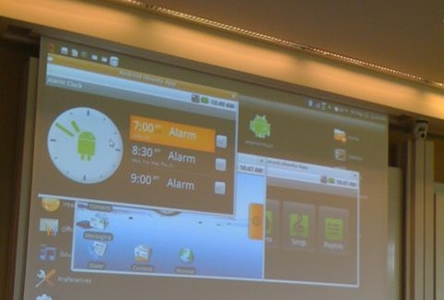
Android enthusiasts, developers or just plain curious sorts might find this interesting. Canonical is working on an execution environment for Android software to run inside an Ubuntu system, bringing all its applications to the desktop. The increasingly-popular mobile platform has seen a lot of speculation regarding its future, including plans to bring it to netbooks or other non-phone devices, and this seems like a firm step in that direction.
##CONTINUE##

Eventually Canonical plans to publish the environment, along with its corresponding source code, for any Linux user to tinker with it. At such an early stage, they've produced little to note, but it makes you wonder if there are other developers working on similar projects behind closed doors. With the line between smartphones and desktops getting thinner, and given the open nature of Android, I can imagine a lot of people would find this interesting. Any increased awareness in Android is going to be beneficial from Google's perspective, and this is doubly true since the launch of their app store, which will need a lot of developer support to become strong.

-----------------------------
BY Justin Mann
Source:TechSpot.com

Copyright © 1998-2009 TechSpot.com
TechSpot is a registered trademark
Powered by StoryTeller
All Rights Reserved.

HTC to sell Google Android smartphone in China

China's first mobile phone based on Google's Android software will go on sale next month in a deal between China Mobile and Taiwan's High Tech Computer (HTC).
##CONTINUE##
The handset, HTC's Magic smartphone, will use a Chinese-language version of the Android operating system developed by HTC, a company representative said.

The software will also be tweaked to meet the needs of China Mobile, the world's largest mobile carrier, the representative said.

The touchscreen phone will come equipped with China Mobile applications including the firm's instant messaging client, a mail service and a download platform for songs and pictures, according to the Web site of Dopod, HTC's brand in China.

Huawei Technologies, a Chinese telecommunications equipment provider, previously announced an Android-based phone for China, but its handset is slated for sale in the third quarter.

HTC, earlier known for handsets based on the Windows Mobile OS, last year became the first firm to offer an Android-based smartphone, the G1 in the U.S.

Phones based on the Open Mobile System OS, a version of Android modified by China Mobile, are also expected in China this year. HTC, Lenovo, Samsung and LG are all developing the handsets, called "OPhones," according to telecom research firm BDA.

But Lenovo's handset, originally earmarked for sale as China's first OPhone this month, may not go to market until the third quarter, said Lei Shi, an analyst at BDA.

China Mobile developed its OS partly to promote the use of its own applications and value-added services, said Shi.

The firm hopes customized phones will attract more users willing to pay for such features, he said. China Mobile aims to launch an application download platform similar to the iPhone App Store this year.

-----------------------------
BY Fletcher and Dan Nystedt
Source:IDG

Copyright (c) 2009, IDG News Service. All rights reserved.
 

Copyright 2008-2009 Daily IT News | Contact Us
